ElectionChamp
Introduction
If you’ve ever organized an election for an HOA, nonprofit, or membership organization, you know the pain of quorum. You send out ballots. You wait. You send reminders. You wait some more. And when the deadline arrives, you’re staring at a participation rate of 22% when your bylaws require 33%.
The election is invalid. The budget doesn’t get approved. The board seats remain unfilled. And you have to start all over again.
Quorum problems aren’t new. But they’re solvable. Online voting is the single most effective tool for reaching quorum faster, and this guide shows you exactly how to use it.
What Is Quorum and Why Does It Matter?
Quorum is the minimum number of members who must participate in a vote for the results to be valid. It’s a safeguard against decisions being made by a tiny minority.
Quorum requirements vary by organization and are typically defined in your bylaws, articles of incorporation, or governing documents. Common thresholds include:
- HOAs: Often 33% to 50% of all voting members (varies significantly by state law).
- Nonprofits: Often defined as a percentage of the full board or a percentage of voting members present (in person or by proxy).
- Unions: LMRDA requirements may apply, with specific thresholds for officer elections.
- Professional Associations: Typically defined in bylaws, often 10–25% of voting members.
If quorum isn’t met, the election is typically invalid, and the vote must be rescheduled — costing time, money, and organizational credibility.
Why Organizations Struggle with Quorum
Understanding the root causes helps you address them strategically:
- Accessibility barriers: In-person-only voting requires members to be physically present at a specific time and place. Members who are traveling, working, ill, or simply far away are excluded.
- Voter apathy: Members who don’t understand the issues being voted on, don’t know the candidates, or don’t believe their vote matters are unlikely to participate.
- Inconvenience: Paper mail-in ballots require finding the ballot, filling it out, and mailing it back. Each friction point loses voters.
- Poor communication: If members don’t know an election is happening, or don’t receive clear instructions on how to vote, they can’t participate.
- Timing conflicts: Short voting windows or inconvenient deadlines exclude busy members.
How Online Voting Solves the Quorum Problem
Strategy 1: Remove Accessibility Barriers
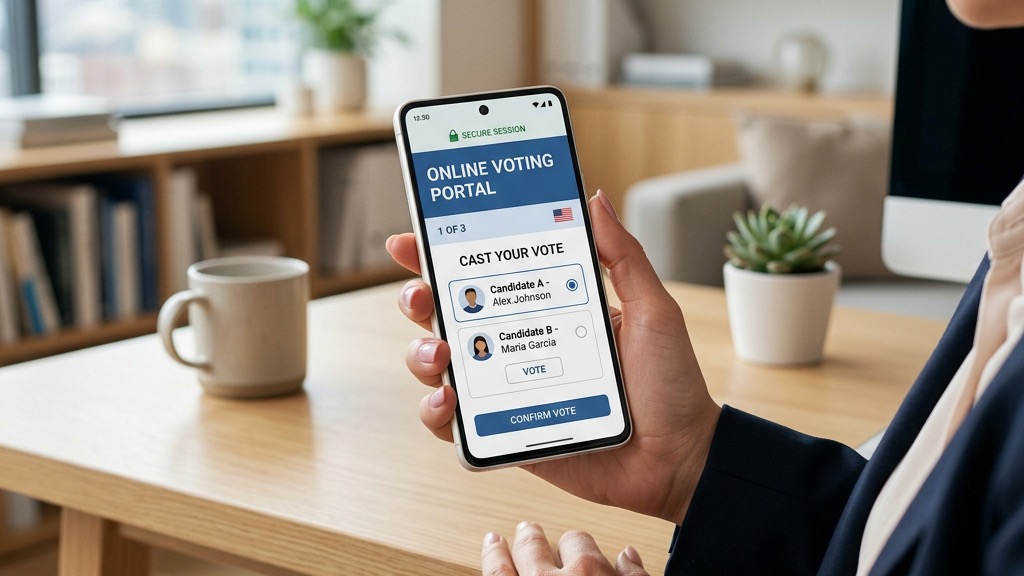
Online voting lets every eligible member vote from anywhere, on any device, at any time during the voting window. A member on vacation in another country can vote from their phone. A member working the night shift can vote at 2 AM. A member with mobility challenges can vote from their couch.
Organizations that switch from in-person or paper-only to online voting consistently report 20–50% increases in participation.
Strategy 2: Extend the Voting Window
Paper ballots are expensive to extend (you’ve already printed and mailed them). In-person votes are tied to a single meeting. But online voting windows can run for days or even weeks at essentially zero marginal cost.
A 5–7 day voting window gives members time to vote when it’s convenient for them. Don’t close the election after just 24 hours unless your bylaws require it.
Strategy 3: Send Strategic Reminders
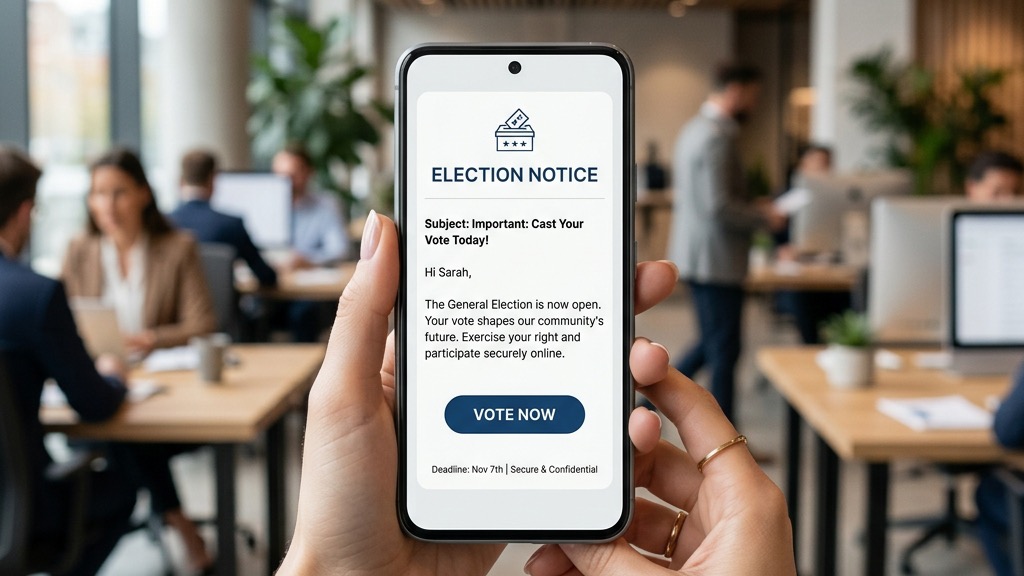
ElectionChamp lets you see who has and hasn’t voted in real time. Use this to send targeted reminders:
- Day 1: Initial notification to all voters.
- Day 3: Midpoint reminder to non-voters. “We’re halfway through the voting period. Have you cast your ballot?”
- Day 5 (24 hours before close): Urgency reminder. “Voting closes tomorrow. Your participation matters.”
- Final hours (optional): “Voting closes in 4 hours. We need [X] more votes to reach quorum.”
Strategy 4: Pre-Election Education
Voter apathy often stems from information gaps. Before the election opens:
- Send candidate profiles or a voter guide explaining what’s on the ballot
- Explain why the vote matters and what happens if quorum isn’t met
- Host a Q&A session or virtual town hall where members can ask questions
- Share the timeline and set expectations about when voting opens and closes
Strategy 5: Use Hybrid Voting
Not every member is comfortable with technology, and some bylaws may require an in-person component. ElectionChamp supports hybrid elections: online voting for members who prefer digital access, plus manual keys (printed 16-digit codes) for members who prefer to vote in person or on paper.
Both channels feed into the same election, are tracked in one dashboard, and produce unified results. No double-counting, no reconciliation headaches.
Strategy 6: Track Participation in Real Time
ElectionChamp’s dashboard shows live participation data: total voters, votes cast, pending votes, and a visual donut chart breaking down voter statuses. A participation trend line chart shows cumulative votes over time.
Use this data to make real-time decisions. If participation is lagging on Day 3, you know to send a more urgent reminder. If you’re 5 votes short of quorum on the last day, a targeted phone call to non-voters might get you over the line.
Quick Wins for Hitting Quorum
- Lower the barrier: Move to online voting if you haven’t already. This alone can increase participation by 20–50%.
- Extend the window: Give members at least 5–7 days to vote.
- Send 1-2 reminders: A structured cadence of initial, midpoint, and final reminders.
- Educate before the vote: Informed members are more likely to participate.
- Use real-time tracking: Monitor participation and intervene early if turnout is low.
- Enable abstaining: Some members may not have an opinion on candidates but can still contribute to quorum by formally abstaining.
- Add extra keys: Have spare keys ready for last-minute eligible voters.
Remember: On ElectionChamp, if every registered voter has cast their ballot, the system automatically closes the election. You don’t have to wait for the deadline if full participation is reached.
Ready to run your first election? Start for free at ElectionChamp.com — no credit card required for up to 20 voters. All features included on every plan.