ElectionChamp
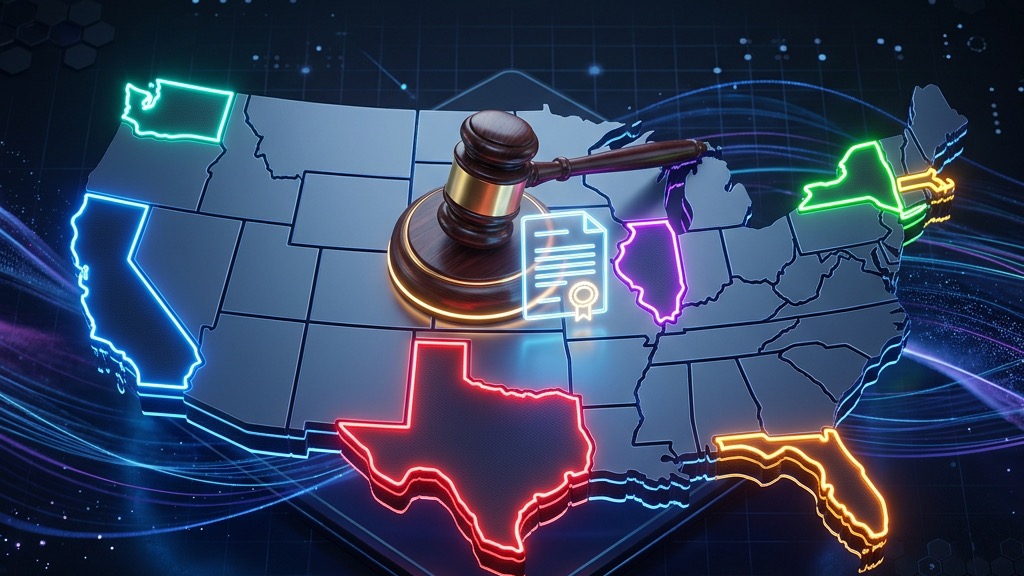
The Evolving Legal Landscape
Electronic voting for HOAs and condominium associations is at a tipping point. As of 2026, a growing number of states have passed legislation explicitly authorizing electronic voting for community associations. Others operate under legal frameworks that neither prohibit nor explicitly address it, leaving the decision to the association’s governing documents.
Understanding your state’s legal position is the essential first step before implementing online voting. This guide provides an overview of the current landscape, with a focus on the states with the most explicit legislation.
Disclaimer: This guide provides general information for educational purposes. It is not legal advice. Consult with a qualified attorney licensed in your state for guidance specific to your association.
California: AB 2159 — The Gold Standard
California is the most progressive state for HOA electronic voting, thanks to Assembly Bill 2159, which amended the Davis-Stirling Common Interest Development Act effective January 1, 2025.
What AB 2159 Allows
- Electronic balloting: HOAs can use electronic means to distribute, collect, and count ballots for member votes.
- Email delivery: Ballots and related materials can be sent electronically to members who have provided consent.
- Secret ballot preservation: Electronic voting systems must maintain the secrecy of each voter’s choices, just as paper secret ballot procedures do.
- Equal access: Associations must still offer non-electronic alternatives for members who do not consent to electronic delivery.
Key Compliance Requirements
- Consent: Members must opt in to receiving ballots electronically. The association cannot force electronic-only voting.
- Security: The electronic system must ensure ballot integrity, voter authentication, and vote secrecy.
- Record retention: Electronic ballots must be retained for the same period required for paper ballots (typically one year).
- Inspector of Elections: The inspector role can be fulfilled through the electronic platform’s oversight capabilities.
Florida: Statute 720 and 718
Florida has one of the largest HOA populations in the country, making its laws particularly influential.
HOAs (Chapter 720)
Florida Statute 720 governs HOAs and addresses electronic voting in several ways. The statute permits electronic voting if authorized by the association’s governing documents. Board members can use electronic communication for board votes (email voting among directors). Member votes for elections and amendments may use electronic methods when the bylaws specifically permit it.
Condominiums (Chapter 718)
For condos, Chapter 718 allows electronic voting for unit owner elections if the association has adopted electronic voting through its bylaws. The condominium must follow specific notice requirements and ensure that the electronic system provides a receipt or confirmation to each voter.
Key Compliance Notes for Florida
- Bylaw authorization required: Unlike California’s statutory approach, Florida generally requires the governing documents to specifically permit electronic voting.
- Notice requirements: Florida has strict notice requirements for elections, typically 14 days for HOAs and 14–60 days for condos depending on the type of vote.
- Record retention: Official election records, including electronic records, must be maintained for at least seven years.
Texas
The Texas Property Code governs HOAs but does not explicitly address electronic voting. However, it also does not prohibit it. Texas associations that wish to conduct electronic voting should ensure their governing documents do not restrict voting to specific physical methods, the electronic system provides adequate security and voter authentication, proper notice is given per the governing documents and state law, and the association’s attorney confirms that electronic voting is permissible under their specific documents.
Other States to Watch
|
State |
Status |
Key Notes |
|
Colorado |
Permitted |
CCIOA (Colorado Common Interest Ownership Act) allows electronic voting when authorized by governing documents |
|
Arizona |
Generally permitted |
No explicit prohibition; governed by association documents |
|
Nevada |
Permitted with conditions |
NRS Chapter 116 allows electronic voting with proper procedures |
|
New York |
Evolving |
Cooperative and condo boards increasingly using electronic methods; governed by business corporation law |
|
Illinois |
Permitted |
Common Interest Community Association Act allows electronic meetings and voting |
|
Virginia |
Permitted |
Virginia Condominium Act and Property Owners Association Act permit electronic voting |
|
Washington |
Permitted |
WUCIOA allows electronic voting when authorized by governing documents |
What If Your State Doesn’t Explicitly Address Electronic Voting?
Many states fall into a gray area where electronic voting is neither explicitly authorized nor prohibited for HOAs. In these situations, the general legal principle is that what is not prohibited is permitted, provided the association’s governing documents allow it.
For associations in these states, the recommended approach is to review your bylaws for any language restricting voting methods, consult with your HOA attorney, amend your bylaws to explicitly authorize electronic voting (this provides the strongest legal foundation), and select a platform that provides a robust audit trail and security features to demonstrate election integrity if challenged.
Steps to Achieve Compliance
- Research your state law: Start with your state’s HOA statute or common interest community act.
- Review governing documents: Check CC&Rs, bylaws, and operating rules for voting restrictions.
- Consult legal counsel: Have your HOA attorney review both state law and your governing documents.
- Amend if necessary: If your bylaws need updating, follow the amendment process defined in your governing documents.
- Choose a compliant platform: Select a voting platform that provides the security, anonymity, and audit trail features required by your state.
- Document everything: Keep records of your compliance research, board resolutions authorizing electronic voting, and all election materials.
Ready to modernize your organizational voting? Start for free at ElectionChamp.com — secure, anonymous, and mobile-friendly voting for every organization.