ElectionChamp
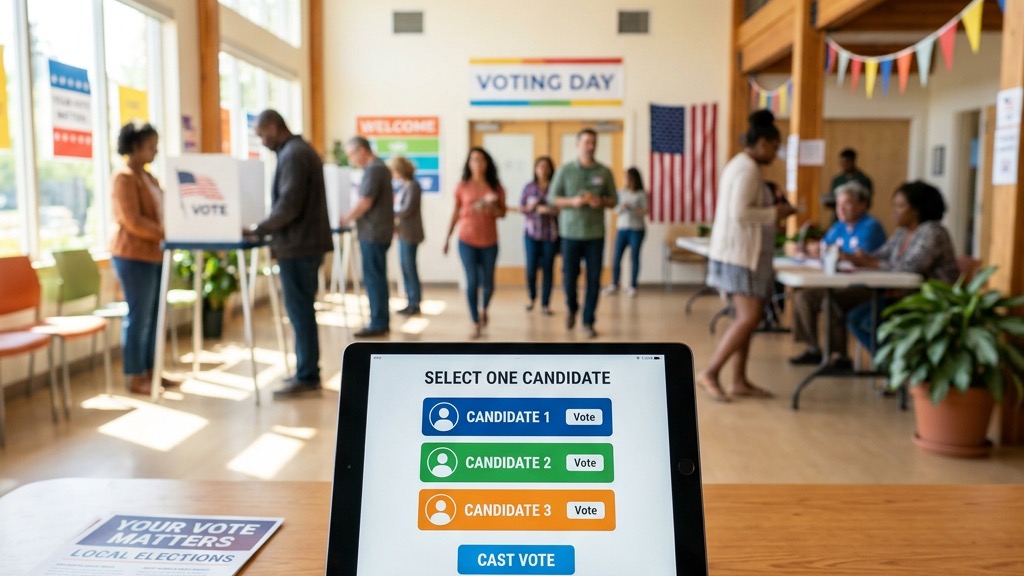
Approximately 40 percent of community associations in the United States are self-managed, meaning they operate without a professional property management company. These boards are run entirely by volunteer homeowners who juggle governance responsibilities alongside their regular lives.
For self-managed boards, elections can be particularly daunting. Without professional staff to handle logistics, volunteer board members must navigate legal requirements, ballot design, voter communication, and result certification on their own. The good news? With the right tools and a clear process, self-managed HOAs can run elections that are just as professional and compliant as those managed by large management companies.
Why Self-Managed HOAs Struggle with Elections
Before diving into solutions, it helps to understand the specific challenges self-managed boards face:
- Knowledge gaps: Volunteer board members may not know their state’s election requirements or their own governing document provisions
- Time constraints: Board members have full-time jobs, families, and other commitments
- Technology hesitation: Some board members are uncomfortable with digital tools
- Budget limitations: Self-managed HOAs typically have tight budgets with no line item for election services
- Institutional memory: When board members rotate, knowledge about past election processes can be lost
Step 1: Know Your Rules
The first step in running a compliant election is understanding the rules that govern your specific association:
Review Your Governing Documents
Pull out your CC&Rs, bylaws, and any election operating rules. Look for provisions on nomination procedures, notice requirements, voting methods, quorum thresholds, term lengths, and whether electronic voting is authorized.
Check Your State Law
Your state’s HOA or community association statute sets minimum requirements that your governing documents cannot override. Key areas include notice periods, secret ballot requirements, record retention, and electronic voting authorization. If you are unsure about your state’s requirements, the Community Associations Institute (CAI) and your state’s Secretary of State website are good starting resources.
Step 2: Create an Election Timeline
Mapping out your timeline prevents missed deadlines and last-minute scrambles:
- 12 weeks before: Review governing documents and form an election committee
- 10 weeks before: Send initial notice calling for nominations
- 8 weeks before: Nomination period opens
- 6 weeks before: Nominations close, verify candidate eligibility
- 4 weeks before: Set up ballot on ElectionChamp, prepare voter list
- 3 weeks before: Send official election notice to all homeowners
- 2 weeks before: Finalize notifications, test everything
- Election week: Open voting, monitor participation, send reminders
- After close: Certify results, communicate to community, archive records
Print this timeline and post it where all board members can see it. Assign a responsible person for each milestone.
Step 3: Set Up Your Election (Without Technical Expertise)
ElectionChamp is designed for people who are not technology experts. Here is what the setup looks like for a typical board election:
What You Need
- A list of eligible voters with email addresses (a spreadsheet works fine)
- Candidate names, photos, and brief biographies
- Your election dates and time zone
- Your community name and logo (optional but professional)
What the Platform Handles
- Generating unique, single-use voting keys for each homeowner
- Sending email notifications with voting links
- Hosting the ballot on a secure, mobile-friendly page
- Preventing duplicate voting automatically
- Calculating and displaying results instantly
- Creating a downloadable audit trail and results report
Setup itself takes about 10 minutes in five steps (Start, Ballot, Voters, Invitations and Launch), once your voter list and candidate details are ready.
Step 4: Communicate Clearly
Communication is where self-managed HOAs often fall short, not because they do not care, but because they do not have dedicated communication staff. Here is a simple, effective communication plan:
Three Emails That Cover Everything
Email 1 (3 weeks before): “Election Announcement” — Explains what is being voted on, who the candidates are, and when voting will open.
Email 2 (Opening day): “Voting Is Now Open” — Includes the voting link and step-by-step instructions. This is the email ElectionChamp sends automatically with each homeowner’s unique voting link.
Email 3 (3 days before close): a reminder sent only to homeowners who have not yet voted. “Send Reminder” on the dashboard sends them their invitation again.
Step 5: Keep It Affordable
Budget is a real concern for self-managed HOAs. Here is how the costs compare:
Method | Typical Cost (100 units) | What It Includes |
|
Paper ballots (DIY) |
$150–$400 |
Printing, envelopes, postage, manual counting |
|
Election management service |
$500–$2,000 |
Full-service ballot administration |
|
ElectionChamp |
$10 |
Complete platform with all features, email notifications, results, audit trail |
For communities with 20 or fewer voters, ElectionChamp is completely free with all features included. For communities up to 200 voters, it is just $10. This makes professional election administration accessible to even the most budget-constrained self-managed HOA.
Step 6: Archive Everything
After the election, create an election archive folder (physical or digital) containing:
- The election results CSV downloaded from ElectionChamp
- The audit trail showing all administrative actions
- Copies of all notices sent to homeowners
- Candidate nomination forms and eligibility verification
- Board meeting minutes certifying the results
This archive protects your board against future disputes and ensures compliance with state record retention requirements. It also creates institutional memory for the next board that takes over.
Building Institutional Knowledge
One of the biggest advantages of using a consistent process and platform is that it builds institutional knowledge. Create a simple one-page election procedure guide that documents your community’s specific process. Include your state’s notice requirements, your bylaw provisions, your ElectionChamp setup preferences, and your communication timeline. Store this with your election archives so future board members do not have to start from scratch.
Conclusion
Self-managed HOAs can absolutely run professional, compliant elections without a management company. The keys are understanding your rules, following a clear timeline, using affordable technology, communicating effectively, and archiving everything. ElectionChamp was built with self-managed boards in mind: simple enough that any volunteer can use it, affordable enough that any budget can accommodate it, and thorough enough that every compliance requirement is met.
Ready to Modernize Your Election?
ElectionChamp makes online voting simple, secure, and affordable. Free for up to 20 voters, just $10 for up to 200. All features included on every plan.
Start your free election today at electionchamp.com or email support@electionchamp.com for help with your HOA election.
Planning your next vote? Read about HOA online voting and board elections, or see pricing: free up to 20 voters, $10 up to 200, then $0.05 per voter.